
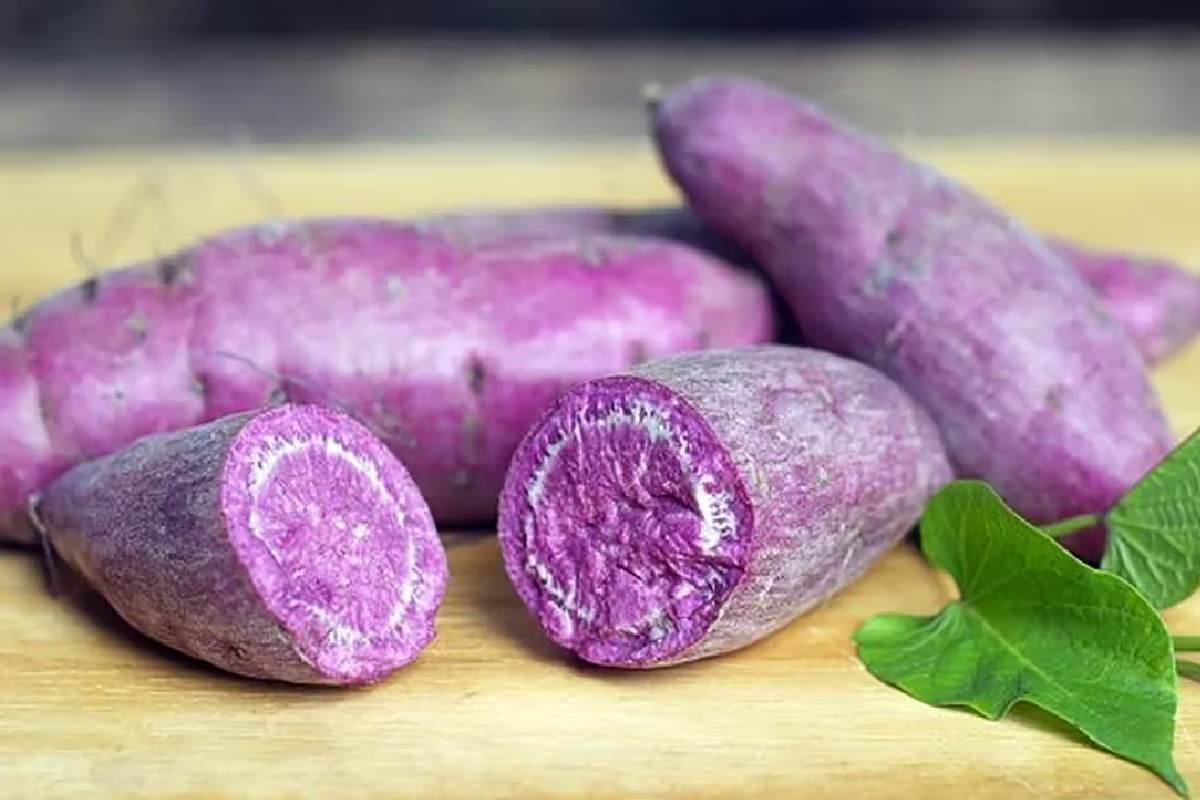
Ube Purple yam is a plant native to Sri Lanka that is also popular in the Philippines. Purple Ube yam is how it’s known in the Philippines. It is a climber that can reach a height of 25 meters with the help of a supporting tree. It thrives in tropical and subtropical environments. The yam root of this plant is tumorous. The leaves are enormous and heart-shaped, just like betel leaves. The veins are black. Purple stem with a square form and a slick surface.
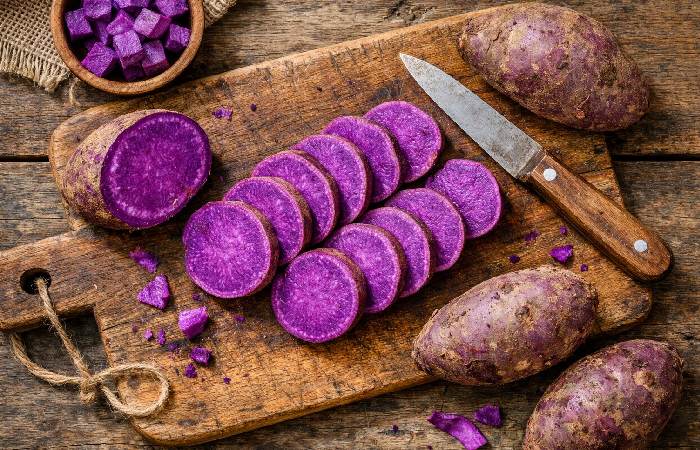
Purple yams are dark brown in hue, with white, yellow, and purple flesh on the interior. This flavor is used in ice cream, milk, Swiss rolls, cookies, cakes, and other pastries in the Philippines
Table of Contents
Ube Purple Yam Contains the Following Nutrients:
The key nutrients are Copper (20.00 %), Vitamin Carbohydrate (21.45 %), Vitamin C (19.00 %), and Potassium (17.36 %), B6 (22.31 %).
Ube Purple Yam Cultivation:
On wet days, we should start planting. In a large pot, plant a tuber slip, such as garlic or another type of tuber. Water yams once every five days at the very least, and check soil moisture every day. Feed them for up to four weeks after planting. Apply 1-inch-high-band fertilizers.
Remove and destroy the brown-coloured bulbils that emerge along with the vines over the summer to keep the plant from self-propagating.
After the vine has ceased growing, harvest the tubers in late July. Replant 2 feet apart and 2 inches deep in the same bed if you want to replant.
Ube Purple Yam Health Benefits
Digestion:
Because it includes fiber and pectin, it aids digestion. Both of these things will help in appropriate digestion. As a result, it will protect us against indigestion and constipation.
Hypertension:
Purple yam lowers blood pressure. Because it includes anthocyanins, it will keep your blood pressure under control.
Defends the Liver:
Anthocyanins in the root will be extracted. The production of liver scar tissue and liver cell damage may be minimized due to this extract.
Blood Circulation:
Purple pigments in purple yam help to circulate blood throughout the body. It is anti-oxidant in nature. Blood clots will not form as a result. The blood circulation improves. Clear.
Cancer:
Purple yam has anti-cancer properties. Cancer is a deadly disease that causes excruciating suffering. Radiation and chemotherapy treatments cause increased pain and discomfort. Daily use of yam boosts immune and helps to prevent cancer to some extent. Colon cancer can be avoided by eating yam. Vitamin A found in yam helps to prevent cancers of the mouth and lungs.
Asthma Treatment:
Asthma is cause by the inability of the pulmonary organs to expand. Purple yam should be consume daily. It is pretty effective in curing asthma.
Anti-Bacteria:
Purple yam has a lot of antimicrobial properties. As a result, adding it to your regular diet can help you overcome all bacterial issues.
Carbohydrates:
Carbohydrates are abundant in purple yam. It has a significant amount of it. Purple color can use as a food coloring component.
Copper And Iron:
Copper and iron are found in purple yam, which aids in preventing anemia. It also helps the kidneys, spleen, and pancreas to cleanse.
Ube Purple Yam Side Effects and Allergies:
It is not to be done by breastfeeding or nursing mothers as it kills the baby. You must avoid yam in case of uterine fibroids, endometriosis, ovarian cancer, uterine cancer or breast cancer. Yam should be avoid by people who have a protein S deficiency since it can induce blood clots.
Macronutrient Profile (Per 100g Approximate)
| Nutrient | Amount | Functional Role |
| Energy | 110–120 kcal | Sustained energy source |
| Carbohydrates | 26–28 g | Primary fuel for the body |
| Dietary Fiber | 3–4 g | Gut health, digestion |
| Protein | 1.5–2 g | Tissue repair |
| Fat | 0.1–0.2 g | Minimal fat content |
Ube is also mainly carbohydrate, which means that it is effective in replenishing energy without compromising the moderate fiber content. (USDA)
Micronutrient Breakdown
Key Vitamins
- Vitamin C: Aids in immunity and collagen production.
- Vitamin A (activity of beta-carotene): Vision and skin condition.
- Vitamin B6 (Pyridoxine): Brain metabolism and function.
- Folate (Vitamin B9): Health of the pregnancy and DNA synthesis.
Essential Minerals
- Potassium: Controls blood pressure and water balance.
- Magnesium: Muscle, nerve activity.
- Iron: Hemoglobin production
- Copper: Formation of red blood cells and antioxidant defense.
- Manganese: Growth and metabolic functions of the bone.
Phytochemical Composition
The deep purple color of ube is attributed to anthocyanins, a group of flavonoids also present in blueberries and blackberries.
Key Bioactive Compounds:
- Anthocyanins (cyanidin, peonidin derivatives)
- Phenolic acids
- Flavonoids
These compounds contribute to:
- Anti-inflammatory effects
- Oxidative stress reduction
- Cellular protection
Glycemic Index and Diabetic Considerations
Ube has a moderate glycemic index (GI ~ 50–60) depending on preparation.
- Boiled ube → Lower GI
- Processed desserts (ice cream, halaya) → Higher GI
Compared with white rice, ube releases glucose more gradually, making it a comparatively better option for controlled energy release.
Comparison With Other Root Vegetables
| Food | Calories | Fiber | Antioxidants | GI |
| Ube | Moderate | Moderate | High | Medium |
| Sweet Potato | Moderate | High | Moderate | Medium |
| Taro | High | Low | Low | High |
| Potato | Moderate | Low | Low | High |
Ube stands out primarily due to its antioxidant density.
Culinary and Industrial Uses
Food Applications
- Ube halaya (jam)
- Ice cream and desserts
- Cakes, pastries, and breads
- Bubble tea flavoring
Functional Food Industry
- Natural food coloring alternative to synthetic dyes
- Ingredient in nutraceutical formulations
- Used in gluten-free flour blends
Storage and Shelf Life
- Fresh tubers: 1–2 weeks at room temperature
- Refrigerated: Up to 3 weeks
- Frozen (processed): Several months
Proper storage reduces nutrient degradation, particularly Vitamin C.
Global Market and Pricing (2026 Estimate)
India (Imported / Specialty Stores)
- Fresh Ube: ₹300–₹600 per kg
- Frozen grated Ube: ₹400–₹900 per kg
- Ube powder: ₹800–₹1500 per kg
Philippines (Local Market)
- Fresh Ube: ₱80–₱150 per kg (₹120–₹220 approx.)
United States / International
- Fresh Ube: $6–$12 per lb
- Ube extract/flavoring: $10–$25 per bottle
Prices vary significantly due to import logistics and seasonal availability.
Agricultural and Yield Insights
- Growth cycle: 8–10 months
- Yield per hectare: 10–20 tons
- Climate requirement: Warm, humid (25–30°C)
- Soil preference: Well-drained loamy soil
Ube farming is labor-intensive but profitable in tropical economies.
Scientific Research and Emerging Studies
- Antioxidant Research
Studies indicate ube extracts may reduce oxidative stress markers, potentially lowering chronic disease risk.
- Anti-Diabetic Potential
Preliminary studies suggest improved insulin sensitivity due to polyphenol content.
- Gut Microbiome Impact
Fiber and resistant starch in ube support beneficial gut bacteria growth. (FAO)
Processing Impact on Nutritional Value
| Processing Method | Nutrient Retention |
| Boiling | High retention |
| Frying | Reduced nutrients |
| Baking | Moderate retention |
| Industrial processing | Significant loss (esp. Vitamin C) |
Cultural and Economic Significance
Ube plays a central role in Filipino cuisine and festive dishes. Its demand has increased globally due to:
- Social media food trends
- Rise in plant-based diets
- Demand for natural food colorants
Sustainability and Environmental Impact
- Requires moderate water compared to rice
- Can be intercropped with other plants
- Soil-enriching crop due to organic residue
Conclusion
Ube purple yam is more than an aesthetically pleasing root crop; it is a nutritionally enriched and functional food. Its carbohydrate base is rich, and it is a good source of energy, and its fiber content aids digestive efficiency. The difference between ube and other tubers is that ube has high levels of anthocyanins- bioactive compounds that are linked to antioxidant, anti-inflammatory and possible disease-preventive properties.
In terms of diet, ube is a good fit to the balanced nutrition as it is taken in minimally processed forms. Although both conventional and contemporary culinary applications, e.g., desserts and flavoring, have gained it worldwide popularity, such preparations usually modify its glycemic effects and decrease nutrient content.
Ube has become an international specialty ingredient with its economic impact shifting towards a regional staple due to the need of natural food colorants and plant-based options. It is a viable agricultural crop in tropical climates with moderate sustainability advantages.
Altogether, ube purple yam can be viewed as an intersection of nutrition, functionality, and cultural relevance and a good addition not only to the traditional food system but also to the health-oriented modern food system.
