

Platelets represent one of the most significant parts of the human blood, which is crucial in keeping the organism in question able to prevent bleeding and heal the damaged blood vessels. These small cell fragments circulate in the blood and react quickly when an injury happens and produce clots that stop too much bleeding. Although platelets are tiny, they are vital to the general well-being and survival.
Proper wound healing and blood clotting requires a healthy number of platelets. The platelet levels may either be too low or too high, which can cause several medical disorders such as bleeding disorders, blood clots, and cardiovascular risks. Thrombocytosis and thrombocytopenia are platelet disorders, which may occur as a result of infections, drugs, bone marrow diseases, or underlying diseases.
New applications in regenerative therapies via platelets have also been discovered in medical research in recent years, including platelet-rich plasma therapies to recover an injury, restore hair, or rejuvenate a skin. Knowing the role of platelets and how they work, their level and the treatment of platelet disorders can make people more aware of maintaining their health.
This paper discusses platelet activities in the body, normal platelet count, conditions that cause abnormal platelet count, diseases related, treatment options, and methods of ensuring normal platelet functioning.
Table of Contents
What Are Platelets?
Platelets or thrombocytes are the small fragments of colorless cells that are present in blood and are significant in blood clotting and healing wounds. Platelets do not have a nucleus as red blood cells and white blood cells do. They are generated in the bone marrow using large cells termed as megakaryocytes.
In case a blood vessel is torn, platelets are sent to the point of injury and make a clot to prevent bleeding. The absence of platelets would see the excessive loss of blood even with minor injuries.
Key Characteristics of Platelets
| Feature | Description |
| Scientific name | Thrombocytes |
| Produced in | Bone marrow |
| Lifespan | 7–10 days |
| Size | 2–3 micrometers |
| Normal count | 150,000–450,000 platelets per microliter |
Platelets circulate in the bloodstream until they are activated by vascular injury or inflammation.
How Platelets Are Produced in the Body
Platelet production occurs through a process called thrombopoiesis, which takes place in the bone marrow.
Steps of Platelet Formation
- Stem cells in bone marrow develop into megakaryoblasts
- These cells mature into megakaryocytes
- Megakaryocytes release fragments of cytoplasm
- These fragments enter the bloodstream as platelets
The hormone thrombopoietin, mainly produced in the liver and kidneys, regulates platelet production. When platelet levels drop, the body increases thrombopoietin production to stimulate the bone marrow.
The Role of Platelets in Blood Clotting
| Role of Platelets | Details |
| Recognize Blood Vessel Injury | Platelets quickly detect damage in a blood vessel and move to the injury site. |
| Adhere to the Damaged Area | They stick to the exposed surface of the injured blood vessel to begin clot formation. |
| Become Activated | Once attached, platelets change shape and become active to respond more effectively. |
| Release Chemical Signals | Activated platelets release substances that attract more platelets to the injury. |
| Form a Platelet Plug | They clump together to create a temporary plug that helps stop bleeding. |
| Support the Clotting Process | Platelets provide a surface that helps clotting proteins work together efficiently. |
| Help Produce Fibrin | Their activity supports the formation of fibrin, a protein mesh that strengthens the clot. |
| Stabilize the Clot | Platelets help make the clot firmer and more secure to prevent further blood loss. |
| Assist in Wound Repair | They release growth factors that support healing of the damaged tissue. |
| Prevent Excessive Bleeding | Overall, platelets play a key role in protecting the body from too much blood loss after injury. |
Platelet Count, Disorders, and Their Health Implications
What Causes Platelets To Reshape Themselves?
Platelets, the tiniest of our blood cells, can only be seen through a microscope. In their active state, they appear as little plaques. When a blood vessel is injured, it sends a signal. Platelets respond to this signal by moving to this location and creating their “asset.” Platelets lengthen their empire to make touch with the damaged blood artery, resembling a spider or an octopus
What Is A Normal Count?
| Blood Test Measure | Normal Count |
| Platelet Count | 150,000 to 450,000 platelets per microliter (mcL) of blood |
| Count Range | Meaning |
| Below 150,000/mcL | Low platelet count, which may increase bleeding risk |
| 150,000–450,000/mcL | Normal platelet count |
| Above 450,000/mcL | High platelet count, which may increase clotting risk |
What It Means To Have A Large Number Of Platelets
Thrombocytosis is the medical word for having too many platelets, and there are two types:
- Primary or severe thrombocytosis is cause by aberrant cells in the bone marrow that cause platelets to proliferate for unexplained reasons.
- Secondary thrombocytosis is identical to primary thrombocytosis, except it is cause by a long-term illness or condition, such as anemia, malignancy, inflammation, or infection.
There are signs and symptoms, including short blood clots in the arms and legs, leading to a heart attack or stroke if not addressed. In extreme situations, the patient may need to undergo platelet paresis surgery. It lowers platelet count by withdrawing blood, separating platelets, and returning red blood cells to the body.
Symptoms of secondary thrombocytosis are generally linking to the illness. If you have an infection or anemia, for example, you will be treates for these conditions, and your platelet count will fall as a result.
What It Means To Have A Small Number Of Platelets
Thrombocytopenia is a condition in which your platelet is insufficient. Easy bruising and bleeding from the gums, nose, and gastrointestinal tract are common symptoms. When anything prevents your body from producing, your platelet count drops. It might be attributes to a variety of causes, such as:
- Medications
- Inheritance condition
- Certain forms of cancer, such as leukemia or lymphoma
- Cancer chemotherapy treatment
- Kidney infection or malfunction
The Relationship Between Platelets And Cardiovascular Disease
| Aspect | Relationship Between Platelets and Cardiovascular Disease |
| Normal Function | Platelets normally help stop bleeding by forming clots after blood vessel injury. |
| Clot Formation | In cardiovascular disease, platelets can become overactive and form harmful clots inside blood vessels. These clots may block blood flow. |
| Heart Attack Risk | When a fatty plaque in a coronary artery breaks or ruptures, platelets gather at the site and help form a clot that can trigger a heart attack. |
| Stroke Risk | Platelet-driven clots can also block blood flow to the brain, increasing the risk of ischemic stroke. |
| Atherosclerosis Link | Platelets are involved not only in clotting but also in inflammation and plaque-related processes that contribute to atherosclerosis. |
| High Platelet Count | A higher-than-normal platelet count can increase the chance of abnormal blood clots, which may raise cardiovascular risk in some people. |
| Antiplatelet Medicines | Drugs such as aspirin and other antiplatelet therapies are used in some patients to reduce platelet clumping and lower the risk of future heart attack or stroke. |
| Balance of Risk | While reducing platelet activity can help prevent dangerous clots, too much suppression can increase bleeding risk. |
| Clinical Importance | Platelets are a key target in cardiovascular prevention and treatment because they are closely tied to thrombosis, heart attack, and stroke. |
Functions of Platelets in the Body
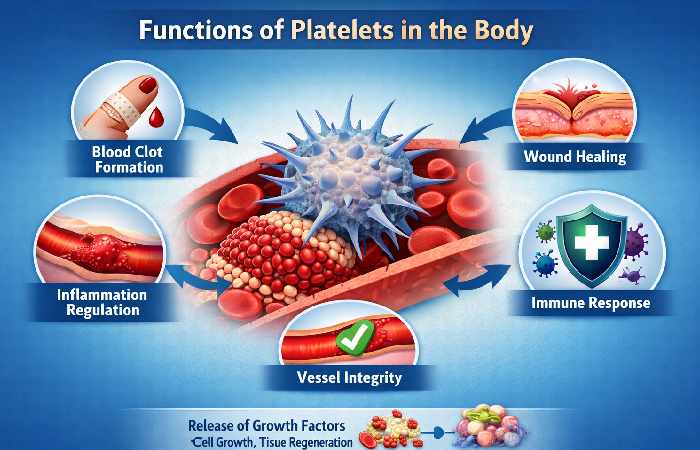
Although their primary function is clotting, platelets also play several other roles.
Major Functions
- Blood clot formation
- Wound healing
- Inflammation regulation
- Immune response support
- Maintaining blood vessel integrity
Platelets also release growth factors that stimulate tissue repair and regeneration.
Platelet Testing and Diagnosis
Doctors use various laboratory tests to evaluate platelet health.
Common Platelet Tests
| Test | Purpose |
| Complete Blood Count (CBC) | Measures platelet count |
| Platelet Function Test | Evaluates clotting ability |
| Bone Marrow Test | Identifies production problems |
| Peripheral Blood Smear | Observes platelet shape and size |
Average Cost of Platelet Tests
| Test | Estimated Cost (India) |
| CBC test | ₹200 – ₹500 |
| Platelet count test | ₹150 – ₹400 |
| Platelet function test | ₹1,500 – ₹3,000 |
| Bone marrow test | ₹5,000 – ₹15,000 |
Prices may vary depending on the hospital or diagnostic center.
Foods That Help Increase Platelet Count
Diet can play a supportive role in maintaining healthy platelet levels.
Platelet-Boosting Foods
Folate-rich foods
- Spinach
- Asparagus
- Lentils
- Avocados
Vitamin B12 sources
- Eggs
- Fish
- Dairy products
Iron-rich foods
- Red meat
- Beans
- Pumpkin seeds
Vitamin C foods
- Oranges
- Strawberries
- Bell peppers
These nutrients support bone marrow function and platelet production. (Johns Hopkins Medicine)
Foods That May Reduce Platelet Count
Certain foods and substances may interfere with platelet function.
Foods to Limit
- Alcohol
- Garlic (in excessive amounts)
- Omega-3 supplements
- Quinine-containing beverages
- Artificial sweeteners
While these foods are not harmful in moderation, excessive intake may affect platelet activity.
Medical Treatments for Platelet Disorders
Treatment depends on whether the platelet count is too high or too low.
Treatments for Low Platelet Count
- Corticosteroid medications
- Immunoglobulin therapy
- Blood or platelet transfusion
- Treatment of underlying disease
Treatments for High Platelet Count
- Low-dose aspirin
- Platelet-lowering medications
- Plateletpheresis (removal of excess platelets)
Estimated Treatment Costs
| Treatment | Estimated Cost |
| Platelet transfusion | ₹8,000 – ₹20,000 per unit |
| Plateletpheresis | ₹10,000 – ₹25,000 |
| Hospital treatment for severe thrombocytopenia | ₹20,000 – ₹1,00,000+ |
Costs depend on hospital type and severity.
Platelets in Modern Medical Therapies
Platelets are now widely used in regenerative medicine.
Platelet-Rich Plasma (PRP)
PRP therapy involves concentrating platelets from a patient’s blood and injecting them into damaged tissues.
Common Uses of PRP
- Sports injury recovery
- Hair loss treatment
- Skin rejuvenation
- Orthopedic treatments
- Dental procedures
Average PRP Treatment Cost
| Treatment | Price Range (India) |
| PRP for hair loss | ₹4,000 – ₹10,000 per session |
| PRP for skin treatment | ₹5,000 – ₹12,000 |
| PRP for joint injuries | ₹8,000 – ₹20,000 |
Multiple sessions are often required.
Platelet Donation and Blood Banks
It is a specialized blood donation procedure called apheresis.
Platelet Donation Facts
- Donation time: 60–90 minutes
- Donation frequency: every 2 weeks
- Shelf life of platelets: only 5 days
- Used for: cancer patients, surgeries, trauma cases
Platelets play an important role in patients who are chemotherapy or major surgery patients. (National Heart, Lung, and Blood Institute)
How to Maintain Healthy Platelet Levels
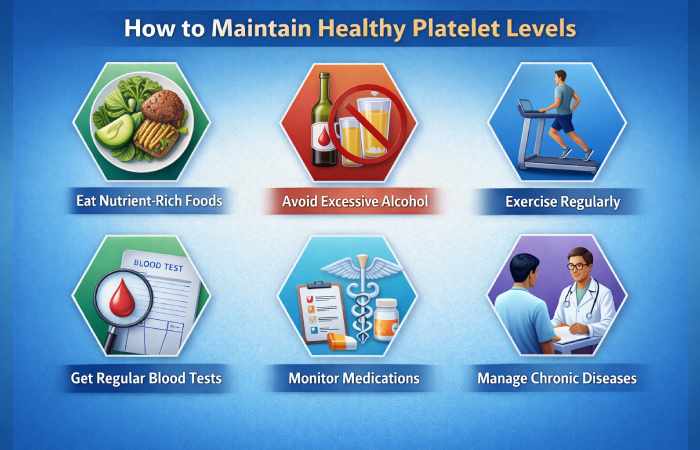
Maintaining platelet health involves lifestyle and medical awareness.
| Tip | How to Maintain Healthy Platelet Levels |
| Eat a Balanced Diet | Include foods rich in vitamins and minerals such as leafy greens, fruits, beans, nuts, and lean proteins. |
| Get Enough Vitamin B12 | Vitamin B12 helps support healthy blood cell production. Foods like eggs, dairy, fish, and fortified cereals can help. |
| Increase Folate Intake | Folate is important for making blood cells. Good sources include spinach, lentils, asparagus, and citrus fruits. |
| Maintain Iron Levels | Iron supports healthy blood production. Foods such as red meat, beans, tofu, and spinach are useful sources. |
| Avoid Excess Alcohol | Too much alcohol can affect bone marrow function and lower platelet production. |
| Stay Hydrated | Drinking enough water helps the body function properly and supports overall blood health. |
| Exercise Regularly | Moderate physical activity supports circulation and general health, which may help maintain normal platelet levels. |
| Avoid Unnecessary Medicines | Some medicines can affect platelets, so use them only as directed by a healthcare professional. |
| Manage Underlying Conditions | Treating infections, nutritional deficiencies, or chronic illnesses can help keep platelet counts in a healthy range. |
| Get Regular Checkups | Routine blood tests can help monitor platelet levels and detect any issues early. |
Platelet abnormalities can be detected early and the complications can be prevented, including internal bleeding or blood clots.
When to See a Doctor
The presence of the symptoms concerning platelet disorders requires medical attention.
Warning Signs
- Frequent nosebleeds
- Unusual bruising
- Prolonged bleeding from cuts
- Blood in urine or stool
- Severe headaches
- Sudden weakness
The symptoms could be indicative of serious disorders related to the platelet functioning.
Conclusion
Platelets are highly important in ensuring that the body has its natural defense against bleeding and aids the process of healing the body after a wound. Though these are the smallest blood elements, their role in the formation of clots and repairing of vascular system is something that is vital to life support. A balanced number of platelets is required to avoid such complications as excessive bleeding, abnormal clot formation, heart attack or strokes.
The maintenance of healthy platelet functioning through the monitoring of platelet levels, balanced diet, the management of underlying ailments, and consultation with medical practitioners in case of symptomatic changes are a critical step in maintaining a healthy platelet functioning. Learning about the functionality of platelets and identifying the possible warning signs may allow people to take effective actions to improve their medical conditions and state of health in general.
