

A Personalized Weight Loss Plan is a customized approach to losing weight that’s designed specifically around your body, lifestyle, habits, and health needs—not a generic diet or workout that everyone follows.
It is important that you determine the needs of your body before you embark on your weight-loss program. Eliminating certain foods in your diet or engaging in workouts that your organism does not even allow to perform can lead to health issues or harm. Consequently, it is imperative to know how to make your body lean in the safest manner.
Table of Contents
What a Personalized Weight Loss Plan Includes
Here’s a clear, well-structured table showing what a Personalized Weight Loss Plan includes
| Component | What It Includes | Purpose / Benefit |
| Personal Assessment | Age, gender, height, weight, BMI, health history | Sets realistic and safe weight-loss targets |
| Calorie Planning | Daily calorie needs based on metabolism & activity | Creates a healthy calorie deficit without starvation |
| Customized Meal Plan | Foods based on preferences, culture, veg/non-veg | Improves adherence and long-term success |
| Macronutrient Balance | Right mix of protein, carbs, healthy fats | Supports fat loss, muscle retention, and energy |
| Portion Control | Measured servings and smart swaps | Prevents overeating while staying satisfied |
| Hydration Strategy | Daily water intake goals | Aids digestion and reduces false hunger |
| Exercise Program | Cardio, strength, flexibility workouts | Boosts fat loss and overall fitness |
| Activity Level Guidance | Steps, daily movement, NEAT activities | Increases calorie burn naturally |
| Lifestyle Management | Sleep, stress control, routine planning | Supports hormones and metabolism |
| Behavior Coaching | Mindful eating, craving control, habit building | Encourages consistency and discipline |
| Progress Tracking | Weight, measurements, body composition | Measures success beyond the scale |
| Plan Adjustments | Periodic updates based on results | Prevents plateaus and weight regain |
Tips for Creating a Successful Weight Loss Program
The following are some of the tips to assist you come up with a working weight-loss plan:
| Tip | What to Do | Why It Works |
| Set Realistic Goals | Aim for gradual weight loss (0.5–1 kg/week) | Prevents burnout and rebound weight gain |
| Personalize the Plan | Match diet and exercise to lifestyle & preferences | Increases consistency and long-term success |
| Focus on Nutrition Quality | Choose whole foods, lean protein, fiber-rich meals | Supports fat loss and overall health |
| Maintain a Calorie Deficit | Eat slightly fewer calories than you burn | Essential for sustainable weight loss |
| Include Strength Training | Train 2–4 times per week | Preserves muscle and boosts metabolism |
| Add Regular Cardio | Walking, cycling, swimming | Improves fat loss and heart health |
| Practice Portion Control | Use measured servings and mindful eating | Prevents overeating without strict dieting |
| Prioritize Sleep | Sleep 7–8 hours nightly | Regulates hunger hormones |
| Manage Stress | Meditation, breathing, light activity | Reduces emotional eating |
| Stay Hydrated | Drink enough water throughout the day | Helps control appetite and digestion |
| Track Progress Consistently | Monitor weight, inches, energy levels | Keeps you motivated and accountable |
| Adjust When Needed | Review and tweak the plan regularly | Helps overcome plateaus |
Examine Your Health
It is always best to talk to an expert and determine what your current fitness status is prior to embarking on the fitness journey. You can have a full examination of your health and body structure by appointing a checkup. A complete body scan can provide you with useful data that you may use to create a successful weight-loss plan.
You are able to verify your calories burnt and the daily intake of calories like the number of calories you could consume within a day to aid you shed off the weight. You can also know whether you had any health problems, such as high blood pressure, which you should know about once you start your weight-loss program.
When you have decided on the needs of your body, you can start planning your weight loss process. You will be able to locate the most suitable software or equipment that will help you safely enhance your physique. You can use applications such as Signos to lose weight or read the published articles on weight management to lose weight in a proper way.
Plan a Diet
Diet is a necessary component of weight loss that can be taken into consideration. Unless you change your food habits, it will not help you to work out. Consequently, once you have made your mind up to lose weight it is important to schedule the intake of food.
As opposed to the common perception, you do not necessarily have to give up certain foods in your food list. You can also try to use healthier less restrictive choices so that you are not hungry and yet on a strict diet.
In order to ensure that you are good at regulating your calorie intake, say, you may replace certain ingredients in your food. When it comes to pasta or rice, the low-carb alternatives like squash or cauliflower may be used instead. These products are able to provide the same texture and smoothness with a reduced amount of calories.
The things that you are using currently can make it very hard to perform your daily activities. When you are not feeling good, then you may drop out of your workouts, or even get the will to continue with your fitness. You could also attempt to identify the foods that cause problems within your intestinal system. To take an example, when you always feel bloated after consumption of dairy products, you can switch to plant-based alternatives to determine whether you feel any different.
When your body is in a good shape, you will be able to perform the daily tasks and maintain the fitness routine.
Look for exercises that you enjoy.
In planning your weight-loss plan, you should put into consideration various factors that may affect your success. When you make unrealistic schedules or targets, say having to lose weight, you will feel pressured to do so. Consequently, in customizing your workout program, consider the present lifestyle and environment.
When you engage in exercises that you like, then you might feel easier to transform your body. Two ideas that you may consider to do are hiking and biking in the event that you are an outdoors person. You can either go to a gym or exercise your video at home in case you desire to remain indoors.
Exercise in a manner that you like will make you remain motivated during your trip. In case you desire the physical activities that you put in your fitness program; you can even anticipate your next workout.
Secondly, do not forget to schedule your sweat sessions at the most convenient occasions. In case you are already engaged like in the evening and have a free schedule, then it might be best to exercise during the evening. On the same note, when you do not have so much time to spend on free activities, you can attempt to think of some other alternative exercises to keep you active like taking a walk to work rather than driving. These little nips and tucks can help you in the weight loss endeavor and they can help you a great deal.
Goal‑Setting & Safety
| Aspect | Recommendation | Evidence |
| Target rate of loss | 0.5–1 kg (1–2 lb) per week for the first 6 months; aim for ≤ 10 % body‑weight reduction initially. | Strong recommendation from the Academy of Nutrition and Dietetics (AWM) guideline 1 |
| Initial health assessment | Obtain BMI, waist‑circumference, blood pressure, and a comprehensive health screen before starting any program. | ADA/ACC guidance on baseline evaluation 2 |
| Monitoring frequency | Measure weight and BMI at least quarterly during active treatment; annual full health review (or more often if needed). | ADA/ACC guidance on monitoring intervals 2 |
| Medical clearance | Consult a physician or qualified specialist to confirm the program is safe given any comorbidities (e.g., hypertension, diabetes). | AWM guideline emphasizes physician oversight 1 |
| Adjustment triggers | If weight loss > 1 kg/week, plateaus > 4 weeks, or adverse symptoms appear, reassess diet, activity, and health status. | Consensus from clinical practice recommendations 2 |
Key Components of a Personalized Plan
Here’s a clear and easy-to-understand table showing the key components of a Personalized Weight Loss Plan
| Key Component | What It Covers | Why It’s Important |
| Personal Assessment | Age, weight, height, health conditions, lifestyle | Helps design a safe and realistic plan |
| Customized Nutrition Plan | Calorie needs, food preferences, balanced meals | Supports fat loss without nutrient deficiency |
| Macronutrient Balance | Proper ratio of protein, carbs, healthy fats | Maintains energy and muscle while losing fat |
| Portion Control Strategy | Serving sizes, mindful eating | Prevents overeating and supports consistency |
| Exercise & Activity Plan | Cardio, strength training, flexibility | Boosts metabolism and fat loss |
| Daily Movement Goals | Step count, active habits | Increases calorie burn naturally |
| Lifestyle Management | Sleep, stress, daily routine | Regulates hormones and recovery |
| Behavior & Habit Coaching | Craving control, emotional eating awareness | Builds long-term healthy habits |
| Progress Tracking | Weight, measurements, body fat, energy | Tracks real progress beyond the scale |
| Plan Adjustments | Regular reviews and updates | Avoids plateaus and supports sustainability |
Core Components with Proven Impact
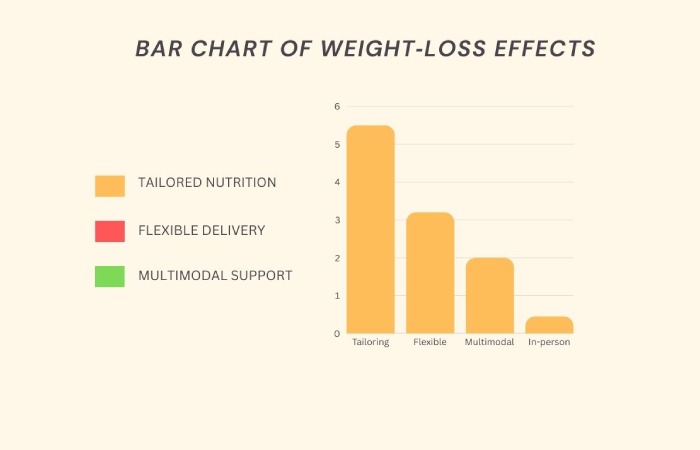
| Component | Mean weight loss (kg) at 12 weeks* | 95 % Credible Interval | Study type |
| Tailoring (personalised advice) | ‑5.5 | ‑7.7 to ‑3.3 | RCTs (network‑meta analysis) |
| Flexible attendance | ‑3.2 | ‑4.3 to ‑2.1 | RCTs (network‑meta analysis) |
| Multimodal referral | ‑2.0 | ‑2.1 to ‑1.9 | RCTs (network‑meta analysis) |
| In‑person delivery | ‑0.45 | ‑0.52 to ‑0.38 | RCTs (network‑meta analysis) |
| Personalised dietary advice | ‑1.2 | ‑1.33 to ‑1.11 | Real‑world service analyses |
| Partial meal‑replacement | ‑2.12 | ‑3.39 to ‑0.89 | Component network meta‑analysis |
| Total meal‑replacement | ‑2.63 | ‑4.58 to ‑0.73 | Component network meta‑analysis |
Daily Meal Plan (Balanced & Practical)
| Meal | Simple, Realistic Option |
| Morning (on waking) | Warm water with lemon or plain water |
| Breakfast | Vegetable omelet or oats with seeds & fruit |
| Mid-Morning Snack | 1 fruit (apple, orange, papaya) |
| Lunch | 1 bowl rice/roti + dal/chicken/fish + vegetables |
| Evening Snack | Handful of nuts or yogurt |
| Dinner | Grilled paneer/chicken + sautéed vegetables |
| Optional | Herbal tea or warm milk (no sugar) |
Daily Activity Plan
| Activity | Duration |
| Walking | 30–45 minutes |
| Strength exercises | 15–20 minutes (3–4 days/week) |
| Stretching | 5–10 minutes daily |
Simple Lifestyle Habits
| Habit | Goal |
| Water intake | 2.5–3 liters/day |
| Sleep | 7–8 hours/night |
| Screen-free time | 30 minutes before bed |
| Portion control | Stop eating when 80% full |
Weight‑Loss Effects
Final Thoughts
Individualized Weight Loss Plan: You do not have to sweat trying to come up with an effective weight-loss plan. You will be able to create a program that suits your body as long as you know your needs and goals. In addition, also seek to change your exercise program into one that fits your liking so that you can adhere to the same without straining. Talk to your doctor before changing your routine so that you would not face any problems with your health.
