
What Do I Do If I’ve Been Exposed to Someone Who Tested Positive for COVID-19?
We know that this information may be concerning to you and that you may have some concerns about this situation. We are now beyond the first days of the pandemic however; COVID 19 is still very easily transmitted. However it is necessary that every person reacts differently to COVID 19 due to factors such as age, other medical problems and vaccination.
The good thing is that now public health advice has been streamlined into realistic and simple actions rather than significant limitations and measures have become about prevention and taking personal responsibility.
Table of Contents
Immediate Steps to Take After Exposure
Symptoms can develop 2-14 days after exposure. Key indicators include:
- Fever or chills
- Cough
- Fatigue
- Shortness of breath
- Loss of taste or smell
- Sore throat
- Headache
Track symptoms daily, even if mild.
COVID-19 Testing Guidelines
When Should You Get Tested?
| Time After Exposure | Recommended Action |
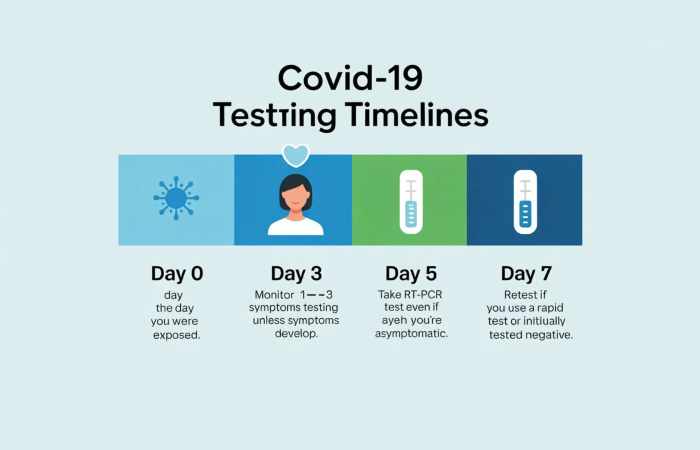
| Day 0 | No test; monitor symptoms |
| Day 1–2 | Too early for reliable detection |
| Day 3–5 | Ideal testing window |
| After Day 5 | Test if symptoms develop or repeat test |
Types of Tests
Rapid Antigen Tests
- Results in 15–30 minutes
- Less sensitive in early infection
- Best used in repeated testing
PCR Tests
- Highly accurate
- Detect infection earlier
- Results may take 1–2 days
Testing Best Practices
- Test around Day 5 if asymptomatic
- Test immediately if symptoms appear
- Repeat testing after 48 hours if symptoms persist and initial test is negative
Current Recommendations
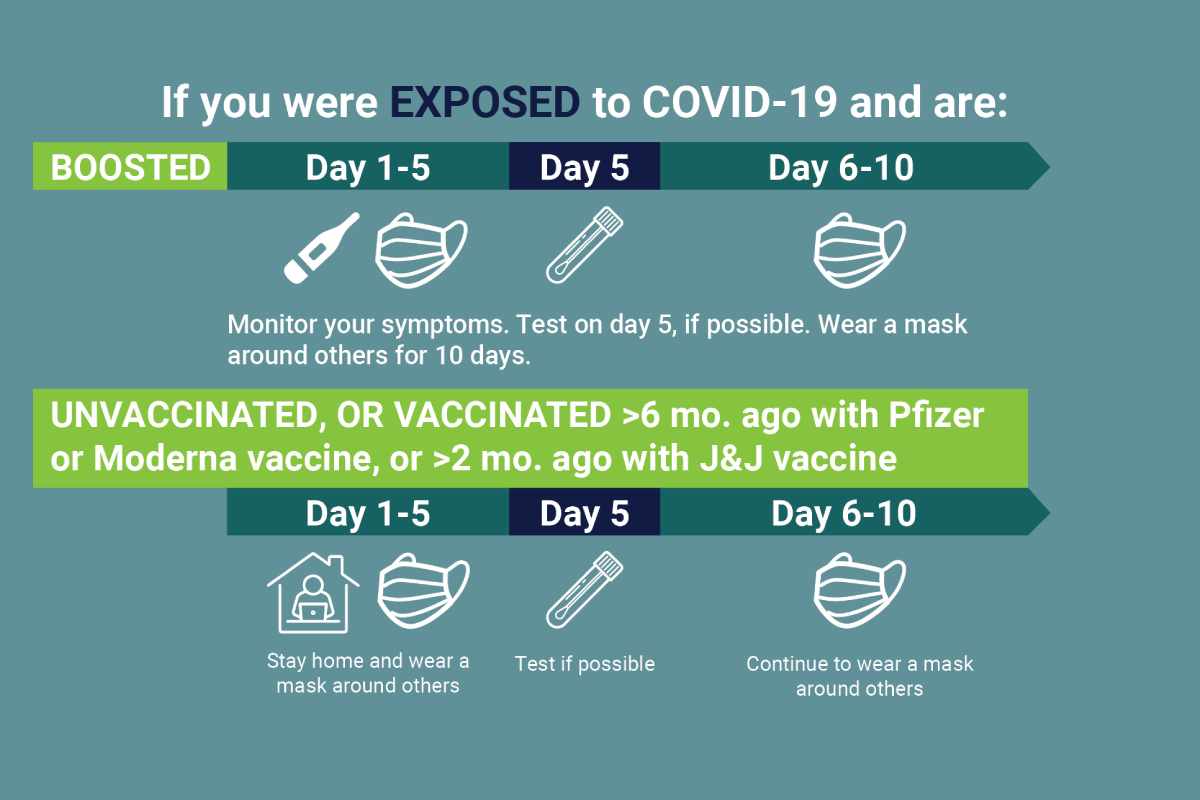
If Exposed but Asymptomatic:
- No compulsory quarantine
- Wear a mask – 10 days
- Test on Day 5
- Avoid risk environments
If Symptoms Develop:
- Stay home immediately
- Get tested
- Avoid all contact with others
Special Cases
Take precautions if you:
- Are unvaccinated
- Have a weakened immune system
- Live with risk individuals
Returning to Normal Activities Following an Exposure
After dealing with a COVID-19 exposure, it is recommended that you resume normal daily routines, rather than snapping straight back into your day to day activities. If no symptoms present then most health advice allows you to continue to go to work, go shopping and continue with your normal daily activities. However, this doesn’t mean a complete return to the pre-exposure routine: a quality mask should be worn especially when in crowded indoor spaces or confined spaces and avoid any unnecessary close contact with people who are elderly and with chronic illness.
Symptoms of COVID-19 are often absent on the days following exposure. Consequently, the illness could manifest up to a week or ten days after contact with a positive case. That is why the monitoring must be kept at least 10 days, although it’s necessary to pay attention to the appearance of symptoms, even slight like a cough or feeling of tiredness, if any are observed it’s necessary to reduce contact with other people immediately, to isolate oneself, and to contact the nearest medical professional or a doctor for a test.
Nutritional Aspects during the Monitoring Period
Food intake, it does not constitute an obstacle in the prevention of COVID-19, but it is essential to immunity. For the duration of the period of monitoring, a diet balanced, various and protein-rich, composed by fresh fruit and vegetables and entire cereals, must be encouraged since food intake is source of energy and nutritional elements essential for ‘the immune system’.
Hydration is an important factor, particularly if symptoms are observed, in that respect drinking water, soups or herbal drinks are recommended so as to not feel tired and keep the energy necessary for recovery. Limiting the consumption of prepared foods, sugar or drinks with caffeine helps the general well-being and capacity to recover.
Physical Activity and Rest
If symptoms haven’t appeared, a light or moderate physical activity such as a walk or a few stretching exercises can help keep physical and mental balance and should be favored during this monitoring period; no strenuous efforts should be advised since this could increase the stress on the body.
On the other hand if symptoms begin to appear the most important thing to do is allow the body to rest and give its energy to fight the illness and not have it wasted. When symptoms subside the more effective method is gradual increase of physical activity rather than back to intense work.
Managements in Sharing a Living Space
In case that several people are sharing a living space, it’s essential to make sure transmission is kept as minimum as possible. An increase of air exchange inside the house could be an useful way: opening the windows and turning on fans should be privileged, where available air purifiers may be also useful. Reducing contact at home should also be prioritized and especially with vulnerable and old individuals, limiting proximity, contact points and shared elements such as the TV remote, kitchen and bathroom counters, for example.
Isolation vs. Quarantine
| Term | Meaning | When It Applies |
| Isolation | Separating infected individuals | After a positive test |
| Quarantine | Restricting movement after exposure | After exposure (if required) |
Symptom Monitoring
Mild Symptoms
- Runny nose
- Mild cough
- Low-grade fever
- Fatigue
Severe Symptoms (Emergency)
- Difficulty breathing
- Persistent chest pain
- Confusion
- Bluish lips or face
When to Seek Medical Care
Contact a healthcare provider if:
- You have chronic conditions or are over 65
- Symptoms are worsening
- You test positive and may need antiviral treatment
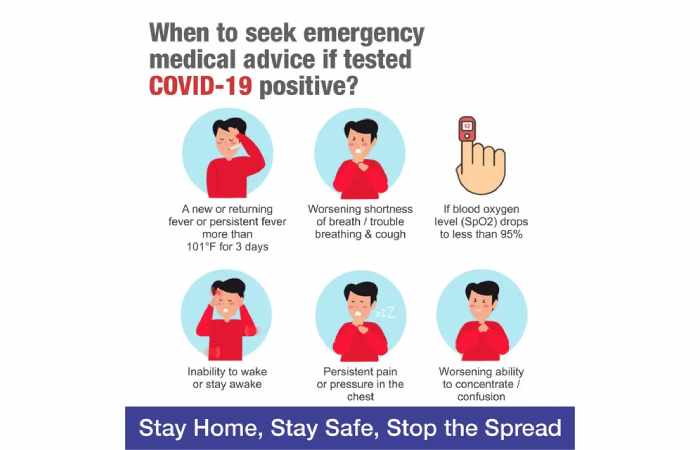
Emergency Warning Signs
Seek urgent care if you experience:
- Severe breathing difficulty
- Chest pressure
- Sudden confusion
- Inability to stay awake (NIH)
Vaccination and Boosters
Vaccination reduces the risk of severe illness.
If Not Up-to-Date:
- Consider booster doses
- Take additional precautions after exposure
If Vaccinated:
- Lower risk of severe disease
- Still possible to contract and spread infection
Common Mistakes to Avoid
- Testing too early (false negatives)
- Ignoring mild symptoms
- Not wearing a mask after exposure
- Assuming vaccination eliminates all risk
- Failing to inform close contacts if positive
Isolation Guidelines (If You Test Positive)
Duration
- Day 0: First day of positive test
- Days 1–5: Stay home, avoid all contact
- Day 6 onward: End isolation.
Continue masking through Day 10.
Extended Isolation
Longer isolation may be required if:
- Illness is moderate to severe
- You are immunocompromised
- Fever persists beyond Day 5
Long COVID Overview
Some individuals experience prolonged symptoms.
Common Symptoms
- Persistent fatigue
- Cognitive difficulty (“brain fog”)
- Breathing issues
- Joint or muscle pain
- Sleep disturbances
Risk Factors
- Older age
- Pre-existing conditions
- Severe initial infection
- Lack of vaccination
Risk Reduction
- Stay up to date with vaccination
- Seek early treatment
- Rest adequately during recovery
Mental Health Considerations
Common Reactions
- Anxiety about infection
- Stress from isolation
- Concern about infecting others
- Frustration or disruption to routine
Coping Strategies
- Limit news consumption
- Practice relaxation techniques
Consult a professional if symptoms become unmanageable.
Work Considerations
If Exposed but Asymptomatic
- Continue working (if allowed)
- Wear a mask for 10 days
- Maintain distance
- Test on Day 5
If Positive
- Stay home for at least 5 days
- Return when symptoms improve and no fever for 24 hours
Employer policies may vary. (CDC)
Travel Guidelines
Avoid Travel If:
- You have symptoms
- You tested positive
- You are awaiting test results
If Travel Is Necessary
- Wear a high-quality mask
- Avoid crowded transport
- Carry rapid tests
After Travel
- Monitor symptoms
- Test if necessary
- Avoid high-risk individuals temporarily
Advanced Prevention Strategies
- Use HEPA air purifiers
- Improve ventilation
- Avoid poorly ventilated areas
- Use properly fitted high-quality masks
- Consider a “test-to-stay” approach
Precautionary measures for high-risk individuals
Even in the absence of symptoms, if you are living with a high risk individual, additional preventive measures should be implemented while co-habitating including limiting physical contact, mask wearing in common spaces, and increasing ventilation in the home. Giving regard to the high risk individual in your household early in the post-exposure period may decrease spread to them.
One might also be practical and think about individual needs ahead of time, making sure medications are readily available, so that one might focus on oneself and personal health/possible transmission. This forethought toward future well being is especially important in preventing the transmission of COVID-19 to the high-risk household member.
Disinfection and Personal Hygiene practices
The simplest method of reducing the risk of illness after a high-risk exposure is cleaning the home and living space. Focus cleaning efforts on surfaces frequently touched such as countertops, phones, doorknobs, and light switches. Disinfectants used can be standard in design, for as the risk of aerosolization is diminished, there still many environmental factors to consider.
Frequent hand washing for twenty seconds or more using soap and water is also an effective method to reduce indirectly transmitted illness, especially after touching high-touch surfaces, coughing/sneezing etc. All these measures may seem like simple aspects of one’s routine and lifestyle, yet will likely prove helpful in reducing one’s own personal risk.
Ventilation and air quality
Air ventilation is very important and is one more aspect that will come into play with reducing exposure risks, even after a high-risk exposure. Living in a poorly ventilated space after a high risk exposure will be especially concerning and pose a high risk due to increasing risk for aerosolization.
The use of fans or opening windows will likely prove to be one of the more efficient ways of ventilation. Some living spaces will utilize a HEPA filtration system to improve the indoor air quality. Avoid close contact and confined living spaces for those who have a high-risk exposure so that infection risk is minimized.
Reinfection Risk awareness
One has to realize that no prior exposure or even vaccination will shield you completely from future exposure and infection with the virus; although immunity from past infection or vaccinations is likely still at play, immunity will eventually wane, so all recommendations will still apply. Future reinfections are still a possible risk and although re-infection may only produce mild illness, especially in the vaccinated individual, it will still prove a problem, and requires constant vigilance in managing this illness.
Workplace guidance and social responsibility
Knowing that a potential infection is on the horizon, communication within the workplace will be an important aspect in its management. Be aware of the guidance provided by your place of employment in regards to post exposure procedures, as well as recommendations from both national health institutions as well as public health officers locally.
While most recommendations call for allowing high-risk individuals who are asymptomatic into work, everyone in the workplace will need to exercise caution, wear masks and physically distance, at least until more is learned. Let close contacts know if you are indeed positive; depending on work policy, one may be required to provide a negative test or stay home for a certain period of time.
Monitoring Health Beyond the Initial Period
Although one may successfully have cleared their 10-day monitoring period with no symptoms or positive tests, the individual still must maintain some vigilance to look for any atypical and late symptoms. It is probable that an individual will need to visit a medical professional to get evaluated for numerous other potentially related symptoms which will be presented differently than typical COVID symptoms.
Stay aware of local case counts and be cognizant of guidelines from the local department of public health.
Quick Checklist
Immediate Actions
✔ Wear a mask
✔ Avoid crowds
✔ Monitor symptoms
Within 5 Days
✔ Get tested
✔ Limit high-risk contact
If Symptoms Develop
✔ Stay home
✔ Test immediately
✔ Contact a doctor if needed
If You Test Positive
✔ Isolate for at least 5 days
✔ Inform close contacts
✔ Follow recovery guidelines
FAQs
Can I go to work after exposure?
Yes, if asymptomatic. Follow precautions and workplace policies.
What if I get a negative result but feel sick?
Retest after 48 hours and stay at home until symptoms have stopped.
How long am I contagious?
Typically 5–10 days if infected, longer in some cases.
Should I inform others?
Yes, especially if you test positive.
Are home tests reliable?
Yes-especially with repeat testing. This test is not as sensitive as a PCR test.
Can I still transmit the virus if I’m vaccinated?
Yes, although typically for a shorter time and at a lower intensity.
Conclusion
Despite the fact that the threat from Covid has diminished considerably since the start of the pandemic it is still there and you should continue to follow current public health advice which is: timely testing, monitoring for symptoms and behavior, face covering and intelligent practices, to reduce the risk.
