

Resilience is the ability to adapt, recover, and stay strong when facing challenges, stress, or difficult life situations. It helps individuals bounce back from setbacks, maintain emotional balance, and continue moving forward despite obstacles.
Table of Contents
What is it?
There are some elements of psychological resilience which comprise the traits of resilient people. Studies have categorised these into six resilience factors:
- Acceptance: Strong individuals would be able to tolerate what has befallen them and view the problems and crisis as normal in life.
- Optimism: “All will be well” – or something like that, is an optimistic idea of a strong individual. Positive thinking makes individuals to be confident and strong.
- Self-efficacy: Convinced that one has the capacities, the abilities to perform is also a significant part of psychological strength. Strong individuals are sure that they can cope with and address crisis and problems independently.
- Personal responsibility: Strong individuals are ready to assume ownership of their lives as opposed to being victims of situations. They aim at taking the initiative to address any issues that may arise in their own responsibility despite not being the source of the issue.
- Network orientation: Friendships give strength in crises. Resilient people build social relationships and openly accept support and help in difficult times.
- Solution orientation: In every crisis, ways usually reveal themselves that help us emerge stronger and learn something from them. Resilient people are oriented towards solutions and try to implement them.
The foundations for resilience are laid in early childhood and explain why certain people are more resilient than others. It is still possible to actively work on your resilience as an adult.
Key Aspects of Resilience
| Aspect | Description |
| Emotional Strength | The ability to manage emotions during stressful situations. |
| Positive Mindset | Maintaining optimism and focusing on solutions rather than problems. |
| Adaptability | Adjusting to change and finding new ways to handle challenges. |
| Self-Confidence | Believing in your ability to overcome difficulties. |
| Problem-Solving Skills | Identifying solutions and making decisions during tough situations. |
| Social Support | Seeking help and encouragement from friends, family, or community. |
How to Train it?
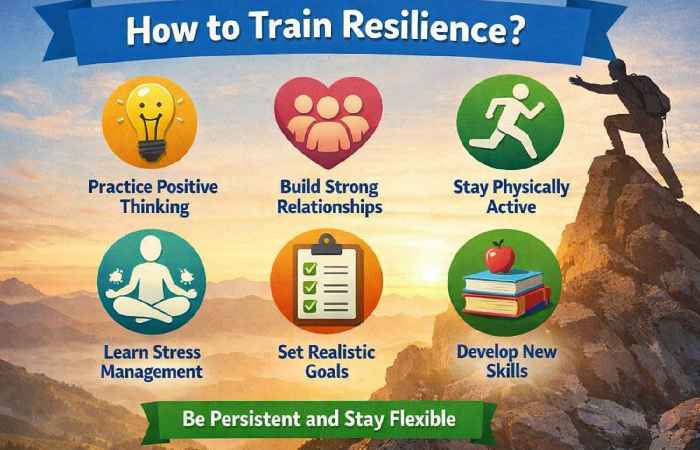
Resilience is like a muscle that can be trained. Based on the six resilience factors, we give you three practical tips to strengthen your resilience.
1. Accept that life is changing and deal with crises with confidence.
Accept that life is ups and downs. Mindfulness is a way to build acceptance. If you are mindful, you can get through crises without sinking into a vortex of negative thoughts and feelings. In addition, an accepting attitude promotes a life-affirming and confident attitude and thus your optimism.
2. Believe in your abilities and make decisions
Especially in hard times you should be aware of your strengths. They will help you stay confident. Think about how you have handled crises in the past. Do you tend to see yourself in a negative light? Do you easily forget what you’ve already accomplished?
Every evening, write down what you did well that day. If you are in danger of forgetting your own skills, you can read in this diary what you have already achieved. In times of crisis, reflect on your abilities. Then you can consciously decide what you can do to solve problems. In this way you take responsibility for your life and train your resilience.
3. Look for ways to solve your problems and accept help.
Resilience also means not giving up so easily. Think about how other people would react in such a situation. Take your time and try to find as many solutions to your problem as possible. Write them all down.
In addition, don’t be afraid to ask friends for help in difficult times. Maybe one of them has been in a similar situation. Confide in your partner or family and accept help when it is offered. In very serious cases of self-doubt or impostor syndrome, professional help may be the solution for you.
Types of Resilience
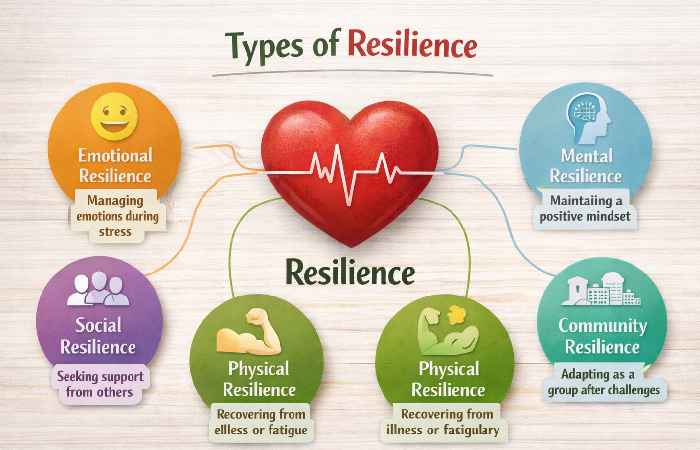
- Psychological Resilience – Emotional and cognitive adaptability
- Emotional Resilience – Managing intense feelings
- Physical Resilience – Bodily stress adaptation
- Social Resilience – Leveraging support systems
- Organizational Resilience – Corporate adaptability
- Community Resilience – Societal crisis recovery
Psychological Resilience
Psychological resilience refers to a person’s ability to mentally and emotionally cope with stress, challenges, and difficult life events. It helps individuals recover from setbacks, adapt to change, and maintain a positive outlook even during tough situations.
Key Features of Psychological Resilience
| Feature | Description |
| Emotional Control | The ability to manage emotions and remain calm during stressful situations. |
| Positive Thinking | Maintaining optimism and focusing on solutions instead of problems. |
| Adaptability | Adjusting to new situations and overcoming unexpected challenges. |
| Self-Confidence | Believing in one’s ability to handle problems and difficulties. |
| Problem-Solving Skills | Finding effective solutions when facing obstacles. |
| Stress Management | Using healthy coping strategies to deal with pressure and stress. |
Emotional Resilience
Emotional Resilience is the ability to adapt, recover, and stay balanced during stressful or challenging situations. It helps people manage emotions, cope with difficulties, and bounce back from setbacks without feeling overwhelmed.
Key Points About Emotional Resilience
- Ability to Handle Stress
Emotionally resilient people can manage stress and remain calm during difficult situations. - Positive Mindset
They maintain optimism and focus on solutions rather than problems. - Emotional Control
It helps in understanding and managing emotions instead of reacting impulsively. - Adaptability
Resilient individuals can adjust to change and unexpected challenges. - Faster Recovery from Setbacks
They recover more quickly from disappointments, failures, or hardships.
Physical Resilience
Physical resilience is the body’s ability to withstand stress, illness, injury, and fatigue while recovering quickly and maintaining overall health. It reflects how well the body adapts to physical challenges such as exercise, illness, or environmental stress.
Key Features of Physical Resilience
| Feature | Description |
| Strength | The body’s ability to perform physical tasks and maintain muscle health. |
| Endurance | The capacity to sustain physical activity for longer periods without excessive fatigue. |
| Recovery Ability | How quickly the body heals and regains strength after illness, injury, or exercise. |
| Immune Support | A strong immune system helps the body fight infections and diseases. |
| Flexibility | The ability of muscles and joints to move easily and reduce the risk of injury. |
| Energy Levels | Maintaining consistent energy throughout daily activities. |
Social Resilience
Social Resilience is the ability of individuals, families, or communities to adapt, recover, and stay connected during social challenges, crises, or changes. It focuses on how people support each other, maintain relationships, and work together to overcome difficulties.
Key Features of Social Resilience
- Strong Social Networks
Having supportive relationships with family, friends, neighbors, and communities helps people deal with challenges. - Community Cooperation
People work together to solve problems and help each other during difficult times. - Adaptability to Social Change
Socially resilient groups can adjust to changes such as economic problems, natural disasters, or social conflicts. - Effective Communication
Open and honest communication strengthens trust and cooperation among individuals. - Access to Resources and Support
Communities with access to healthcare, education, and social services are more resilient.
Organizational Resilience
Organizational resilience refers to an organization’s ability to anticipate, prepare for, respond to, and recover from disruptions or unexpected challenges while continuing to operate effectively. It helps businesses adapt to change, manage risks, and maintain stability during crises.
Key Components of Organizational Resilience
| Component | Description |
| Risk Management | Identifying potential risks and preparing strategies to reduce their impact. |
| Adaptability | The ability of an organization to adjust quickly to changing conditions or challenges. |
| Crisis Management | Developing plans to handle emergencies and minimize operational disruptions. |
| Strong Leadership | Effective leadership helps guide teams through difficult situations. |
| Employee Engagement | Motivated and well-trained employees contribute to a stronger and more resilient organization. |
| Continuous Improvement | Learning from past experiences and improving processes over time. |
Community Resilience
Community Resilience is the ability of a community to prepare for, respond to, and recover from challenges or disasters such as natural disasters, economic problems, or social crises. A resilient community works together, supports its members, and adapts to changes to maintain stability and well-being.
Key Elements of Community Resilience
| Element | Description |
| Strong Social Connections | People in the community support and help each other during difficult times. |
| Preparedness and Planning | Communities plan ahead for emergencies and disasters. |
| Access to Resources | Availability of healthcare, education, food, and shelter helps communities recover faster. |
| Effective Leadership | Good leadership helps organize people and manage resources during crises. |
| Adaptability | The ability to adjust to new situations, challenges, or environmental changes. |
Benefits of Resilience
| Benefit | Description |
| Better Stress Management | It helps individuals handle pressure and stressful situations more effectively. |
| Improved Mental Health | It supports emotional stability and reduces the risk of conditions such as Depression and Anxiety. |
| Faster Recovery from Setbacks | Resilient people are able to recover more quickly from failures or difficult experiences. |
| Increased Self-Confidence | Overcoming challenges builds confidence and strengthens belief in personal abilities. |
| Stronger Relationships | It encourages better communication and support within relationships. |
| Better Problem-Solving Skills | It helps individuals think clearly and find solutions during difficult situations. |
| Greater Adaptability | Resilient people can adjust more easily to change and unexpected events. |
| Improved Overall Well-Being | It contributes to a healthier and more balanced lifestyle. |
Measuring Resilience
Validated assessment tools include:
- Connor-Davidson Resilience Scale (CD-RISC)
- Brief Resilience Scale (BRS)
- Resilience Scale for Adults (RSA)
Typical psychological assessment costs globally:
| Country | Private Assessment Cost |
| USA | $100–$300 per session |
| UK | £80–£200 |
| India | ₹1,000–₹4,000 |
| Australia | AUD 150–300 |
| Canada | CAD 120–250 |
Corporate resilience testing programs can range from $5,000 to $50,000 depending on scale.
Resilicine VS. Related Concepts
Coping vs Resilience
- It is the ability to recover and grow after difficult experiences.
- Coping refers to the strategies people use to manage stress in the moment.
Resilience vs Adaptability
- It focuses on bouncing back after adversity.
- Adaptability is the ability to adjust to new situations or changes.
Mental Toughness vs Resilience
- It includes emotional recovery and flexibility.
- Mental toughness emphasizes persistence and determination under pressure.
Resilience vs Emotional Intelligence
- It helps individuals recover from challenges.
- Emotional intelligence involves understanding and managing emotions effectively.
Well-Being vs Resilience
- It is the ability to handle adversity.
- Well-being refers to overall physical, emotional, and mental health.
Resilience vs Stress Management
- It is a long-term ability to deal with difficulties.
- Stress management focuses on techniques used to reduce stress in daily life.
Ways to Build Resilience
| Method | How It Helps | Simple Tips |
| Develop a Positive Mindset | Positive thinking helps you cope better with challenges and setbacks. | Focus on solutions instead of problems and practice gratitude daily. |
| Build Strong Relationships | Support from friends and family improves emotional strength. | Stay connected with supportive people and share your feelings. |
| Practice Mindfulness | Mindfulness helps calm the mind and improves emotional control. | Practice techniques like Meditation or deep breathing regularly. |
| Stay Physically Active | Exercise improves mood and reduces stress. | Engage in activities such as walking, stretching, or Yoga. |
| Set Realistic Goals | Achieving small goals builds confidence and motivation. | Break large tasks into smaller, manageable steps. |
| Learn from Challenges | Difficult experiences can help develop stronger coping skills. | Reflect on past challenges and identify lessons learned. |
| Maintain Healthy Habits | Good nutrition and sleep support mental strength. | Eat balanced meals and aim for 7–8 hours of sleep daily. |
| Practice Self-Care | Taking time for yourself helps reduce stress and burnout. | Spend time on hobbies, relaxation, or activities you enjoy. |
Corporate Resilience Training
Many companies invest in resilience programs to reduce burnout and absenteeism.
Popular providers:
- Deloitte
- McKinsey & Company
- BetterUp
Corporate workshop costs:
Small teams: $3,000–$10,000
Enterprise programs: $50,000–$250,000 annually
Resilience in Different Populations
Resilience in Different Populations refers to how various groups of people develop the ability to adapt, cope with stress, and recover from challenges based on their life situations, environments, and resources.
| Population Group | How Resilience Appears | Example |
| Children and Adolescents | Learning coping skills, emotional regulation, and problem-solving abilities through family and school support. | A child overcoming academic challenges with teacher and parent guidance. |
| Adults | Managing work, financial responsibilities, and family pressures while maintaining emotional stability. | An adult adapting to job loss by learning new skills. |
| Older Adults | Using life experience, social support, and adaptability to manage health or lifestyle changes. | Seniors adjusting to retirement and staying socially active. |
| Communities in Crisis | Communities working together to rebuild and support members during disasters or emergencies. | Neighborhoods organizing help after floods or earthquakes. |
| Healthcare Workers | Maintaining emotional strength while handling stressful medical environments and patient care. | Doctors and nurses managing stress during health crises. |
| People with Disabilities | Developing strong coping strategies and support systems to manage physical or social challenges. | Individuals using assistive technology and community support to maintain independence. |
Daily Resilience Training Protocol
Morning
5-minute breathing regulation
Cognitive reframing of expected stressors
Midday
10-minute physical activity
Social interaction
Evening
Success journaling
Gratitude listing (3 items)
Problem-solving rehearsal
Total daily time investment: 20–30 minutes.
Cost: $0–$10/month depending on tools. (WHO)
Long-term Benefits of Resilience
Research associates high resilience with:
- Lower risk of depression
- Reduced anxiety disorders
- Faster trauma recovery
- Improved cardiovascular health
- Greater professional performance
Resilience and Digital Tools
| Digital Tool | How It Supports Resilience | Example Use |
| Mental Health Apps | Help manage stress, anxiety, and emotions through guided exercises and mindfulness practices. | Meditation apps, mood-tracking apps |
| Online Learning Platforms | Encourage continuous learning and skill development to adapt to challenges. | Online courses, webinars, training platforms |
| Communication Tools | Strengthen social connections and support networks during difficult times. | Video calls, messaging apps |
| Health & Fitness Apps | Promote physical health, which is important for emotional and mental resilience. | Workout trackers, wellness apps |
| Productivity Tools | Help organize tasks, set goals, and manage time effectively during stressful periods. | Task managers, digital planners |
| Community Platforms | Provide opportunities to connect with supportive communities and share experiences. | Online forums, support groups |
Common Misconceptions
Resilience means suppressing emotions – False
Resilience is genetic only – False
Strong people do not need help – False
Resilience eliminates stress – False
Resilience improves stress response, not stress elimination.

Advanced Strategies for High-level Training
Exposure therapy for controlled stress adaptation
Stoic cognitive rehearsal (inspired by Marcus Aurelius philosophy)
Cold exposure training
Strategic discomfort practice (APA)
Economic Impact
Workplace stress costs:
- USA: $300 billion annually
- UK: £28 billion annually
Investment in resilience training often shows ROI through:
- Reduced absenteeism
- Lower healthcare costs
- Increased productivity
Conclusion
It is a multi-dimensional psychological capacity integrating cognitive, emotional, biological, and social systems. While partially shaped by early development, it remains highly trainable through structured psychological methods, physical conditioning, social engagement, and intentional cognitive practices.
Financial investment in resilience ranges from zero-cost behavioral interventions to enterprise-level corporate programs costing hundreds of thousands annually. However, fundamental resilience-building techniques—mindfulness, cognitive reframing, journaling, physical activity, and social connection—remain accessible globally at minimal cost.
